Set within the onslaught of WWII,
Fury provides a practical and raw
depiction of warfare and the cruelty of mankind. Highly inappropriate in terms
of language and realistic carnage, Fury
succeeds as an emotionally striking film designed for the audience to be
overwhelmed by shock along with the experience of the characters surviving in a
chaotic swirl of savagery, abuse and forgotten morals.
Appreciatively, the historical
accuracy of military units and weaponry were utilized as a main element, examples of WWII era trademarks such as grenades, smoke
bombs, mortars, rapid fire and a mass of US tanks proceeding
Allied fire appears as red lasers to assist the audience's sight
in converging
columns through a series of hedgerows weeks after the commencement of D-Day. A prominent
example of US firepower was displayed through a glimpse of the air force which
passed by overhead while a battalion of Sherman tanks led by tank Fury
confronted a German Tiger and an SS brigade as the Allied forces strove to
conclude the war by subduing town after town as the unit continued to press on
into Germany.
Norman's introduction to Don & tank unit: Fury
However, the direction of the
plot intended not to glorify the military but to expose trampled virtue. This
theme is emphasized through the demoralization of Norman Ellison, a youth who’s loss of
innocence is continually stressed throughout the course of the film. Introduced
as a bumbling clerk-typist disgusted by injustice, he is swiftly taught a
lesson by his commander, Don "Wardaddy" Collier, who physically forces him to murder a captured German
POW, an act signifying the first tainting of his character with
his first shedding of blood.
Don orders Norman to finish the POW, arguing that war is "to kill or be killed."
From this point, he is further instructed to
engage in improper relations with a German girl, the diminishing of their
purity, and finally through the manner in which he strikes down his enemies
with artillery fire while chanting curses at the oncoming barrage of Nazi
forces before his tank. During the finale, his companions entitled him “machine”
as that is what he has become, a machine of war devoid of compassion; the young
soldier no longer seeing his enemy as a human being but rather as a target to
be extinguished for the sole purpose of an end goal swamped with vengeance.
Norman stands atop his gunner hatch
Surprisingly, Fury highlights that it is but a German
soldier who is to be merciful upon Norman. Ironically, the soldier appears to
be roughly the same age, a fact that not all Germans are monsters and that many
are caught up within the throes of war, similarly sharing Norman’s fate. The
German’s compassionate gesture harkens the trace of what Norman has lost; that
noble former self he had intended to maintain. His inner commitment to
displaying justice regardless of the immorality around him is expounded by how
Norman’s terrified eyes stare up in desperation at the German soldier who
kindly smiles and deliberately chooses to spare the life of the young boy
covered in mud and the blood of his fallen comrades.
An impactful theme laced
throughout Fury is the portrayal of
tarnished morality. This motif is visible in Norman and through the example of
a character Boyd Snicknamed “Bible,” a Christian who poses as the moral compass of
the tank. Although Bible displays grace and is a channel pointing towards salvation,
he additionally serves as an overpowering presence in certain instances,
specifically in the scene where he aloofly sits on the tank, refraining from looting while soldiers plunder the captured town and while at the dinner table in the German home. His presence
reminds his platoon leader that they have a duty to respond to, one of which
does not allow a pretense of peace while at war.
Boyd "Bible" Swan receives orders that Fury is to proceed further into the Rhine
However, Bible’s consequential
nature also falters in the face of moral indignity, wherein he remained silent
when there were appropriate times in which he should have stood resolutely for
an actual execution of ethics instead of standing disapprovingly by as his
company devalue and humiliate the German ladies and in another instance when
they cuss, jeer and erupt into praise over the massacre of Nazis with the desire
to extend their suffering. Ultimately, Bible’s character offered the dim light
of salvation and a purpose beyond the harsh reality experienced in Europe, 1945.
His unexpected demise could even be argued as a pardon from God, concealing
Bible within Himself in order for the Christian to not experience as much pain
in his instant death compared to the lingering doom awaiting those remaining
within Fury.
I heard the voice of the Lord calling, "Who will go for Us?" And I said, "Send me."
While this film does not receive
a high recommendation, as the characters were difficult to find endearing, I
appreciated the director’s attempt to portray a realistic account. Despite the
artistic intention, I found myself hardly caring whether they survived for I
had become disenchanted by their adverse behavior, deplorable logic, inhumane
treatment of women and thoroughly disgusted at the militant culture that
subjected its own soldiers to promote such brutality to simply prove the point
that its either your death or your enemy’s in war, regardless of how practical
and base that notion is.
Conclusively, Fury presents a harsh exposé of American
soldiers during WWII – showing how a fierce, typically drunk and foul-mouthed,
mismatched band of soldiers were able to loosely unify around the tank that
they were willing to sweat, bleed and die within in order to protect one
another and preserve the pursuit championed by the Allied forces. The film climaxes
with Norman being heralded as a hero yet such praise starkly resonates with the fact that
they are indeed heroes, but heroes that compromised their morality for the sake
of unrealized ideals accomplished through anything but just means due to succumbing
to animalistic tendencies and debase ethics justified by war. Their sacrifice, no
matter how gallant a demise, does not justify previous brutality and the
battalion’s blatant disregard of righteousness.
During World War II, following the attack on Pearl
Harbor, nearly 120,000 Japanese-Americans were forcibly relocated to internment
camps. Those who lived along the West Coast, whose loyalty to the United States
was previously unquestioned, instantaneously faced prejudice and discrimination
as public opinion viciously turned against citizens of Japanese descent. As the
media circulated the devastating horrors experienced at the Hawaiian naval base,
Americans grew nervous, apprehensive that another such bombing could occur
closer to home. Fear prompted accusations to arise as those who supported the
internment program desired to associate Japanese living along the Pacific with potential
threats of espionage.
Notice of the Order posted in 1942
On
February 19, 1942, Franklin D. Roosevelt signed Executive Order 9066, approving
the government-enforced evacuation of supposed enemies to the state, gathering
those of Japanese, German and Italian heritage in order to relocate these American
citizens to relocation centers set in desolate portions of California, Idaho,
Wyoming and other remote Western states. Although a portion of Europeans were
evacuated, Japan alone faced massive removal. Roosevelt, prompted by the
administration, enacted this ordinance primarily due to perceiving Japanese
citizens as a threat to national security.
Traveling to internment camps
Realizing that the public had been
swayed to segregate the Japanese, most burned or buried any possessions
considered un-American such as records, books and even family heirlooms.
Despite attempts to mask their identity and prove that they were assimilated
into American culture; the Japanese were easily identified and resented by their
neighbors, especially farmers who despised agrarian competition and the
overwhelming presence Japanese farmers enjoyed in California’s central valley
where they experienced economic success. Assuming that cultural and ethnic links
to Imperial Japan would encourage reconnaissance, the United States government
rapidly secured the majority of the U.S. Japanese population which resided within
close proximity to the warring empire due to their position on the Golden
Coast.
An example of Japanese segregation in Idaho
Within
a forty-eight hour period, thousands of Americans claiming Japanese nationality
found themselves within the custody of the Immigration and Naturalization
Service which shuffled these exiles living in vulnerable zones into makeshift
facilities. Although the bulk of these individuals were U.S. citizens by birth,
two-thirds were forced to leave their homes, sell their businesses and pack
only two suitcases per person within a two week period.
Japanese occupying the Fresno fairgrounds
Before being transferred
to official camps, most Japanese loitered in racetracks and fairgrounds for
months, only sheltered by meager tents and rations. Upon arrival to camps such as
Manzanar, the occupants were instructed to build their own lodging. Overcrowded
and ill-prepared, Japanese deportees survived in poor living conditions without
plumbing or cooking facilities and inadequate supplies. Rationing cost
forty-eight cents per internee and was served by camp members in halls housing
roughly three hundred occupants. The camps housed pitiable barracks surrounded
by barbed wire and armed guards.
Japanese families being escorted by military personnel
Some families were disrupted as members were
separated and placed in one of the ten major internment centers while a few
died from the lack of medical care and emotional distress.
A crowded mess hall
Those in desert
regions endured harsh terrain and elements while every camp suffered bouts of
food poisoning, extreme temperatures and unsanitary, communal lavatories and
bathrooms. However, inmates were most concerned about their future for they were left uninformed regarding the duration that their internment would last. Though grieving economic loss
and humiliation, Japanese unity emerged. Camps constructed civic councils, operated
hospitals and newspaper services while churches offered education, choral and
spiritual enlightenment.
Nurse Aiko Hamaguchi assisting Toyoko Ioki at the Manzanar Center
Civilians provided entertainment, enjoying movie
screenings, sumo wrestling tournaments, recitals and the fruits of their
gardens. In 1943 all internees over the age of seventeen were given a loyalty
test, asking them to swear allegiance to their nation and defend her from any
foreign or domestic attack. Detainees were allowed to leave the concentration
camps if they were willing to join the U.S. Army, an offer that most refused.
Returning to barracks after a church service
Harrowingly,
no American placed in the internment camps were officially charged with
espionage nor were they provided with a trial.Two important
legal cases eventually clamored against Japanese internment. Despite arguing
that Japanese’ Fifth Amendment rights were violated by the U.S. government
based on discriminatory claims, Hirabayashi v. United States
(1943), and Korematsu v. United States
(1944) both lost as the Supreme Court ruled in favor of the government. These
cases occurred before Brown v. Board which would establish the doctrine of equal citizenship in 1954.
Families returning from internment camps with assistance
Two
years after signing the Executive Order, President Roosevelt repealed the
decision, allowed internees to return home and closed the final internment camp
in 1945. However, this blatant override of constitutional power and racism
alienated Japanese citizens who saw their citizenship tarnished by the very
nation claiming equality for all. Although many faced hostility after
their release, most decided to rebuild their lives while 5,766 natural born
Japanese renounced their American citizenship and returned to Japan.
Eventually, America issued government apologies and reparations to Japanese
Americans for the property and years they had lost.
Manzanar Relocation Center in Central California
Japanese-American internment serves as one of the
most sweeping deprivations of constitutional rights in American history. The
Executive Order and forced relocation of hundreds of thousands of citizens
deprived equal protection under the law which guarantees the Fifth Amendment,
due process of law and the individual right to work, own property and live
freely. Despite suffering injustice, this period of detainment serves as a
warning, urging America to not stumble from her core values in order to ensure that
such a denial of justice will not have the opportunity to occur again in the proceeding decades.
Suggest Reading:
American Council on Public Affairs . "Issei, Nisei, and
Kibei."Displaced Japanese-Americans. Fortune Magazine, April 1944.
Without a Country. Women's International League for Peace and
Freedom, 1947.
Outcasts! The Story of America's Treatment of Her Japanese-American
Minority. Fellowship of Reconciliation, 1944.
Yoosun, Park. "Facilitating Injustice: Tracing the Role of Social
Workers in the World War II Internment of Japanese Americans."Social Service Review 82.3
: 447-483.
Wozniacka, Gosia. "Memorial site to mark Japanese American
detention during WWII." Lubbock Avalanche-Journal.
http://lubbockonline.com/life/2011-10-09/memorial-site-mark-japanese-american-detention-during-wwii
(accessed March 17, 2014).
"Korematsu v. United States, 323 U.S. 214(1944): The U.S. Supreme
Court Upholds Internment." History Matters.
http://historymatters.gmu.edu/d/5151 (accessed March 17, 2014).
"Ansel Adams's Photographs of Japanese-American Internment at
Manzanar." Library of Congress.
http://www.loc.gov/pictures/collection/manz/ (accessed March 17, 2014).
RLBARNES. "FEBRUARY 19, 1942: Roosevelt’s Executive Order 9066 and
Japanese Internment During World War II.” U.S. History Scene.
http://www.ushistoryscene.com/uncategorized/february-19-1942-roosevelts-executive-order-9066-and-japanese-internment-during-world-war-ii/
(accessed March 17, 2014).
One of the most celebrated Canadian soldiers, Leo
Major served in World War II as well as the Korean War. His actions earned the Distinguished
Conduct Medal, a prestigious award only two other Canadians have received yet he has achieved this honor twice. Born in Massachusetts on
January 23, 1921, his family soon relocated to Montreal, Canada. Suffering a tempestuous
relationship with his father, Leo ran away from home to live with his aunt. Once
he completed high school, the lack of career opportunities prompted him to
enlist in the Canadian army. He was placed in the Regiment de la Chaudiere,
sent to Scotland to train as a sniper and was selected as a member of the elite
squadrons to engage D-Day operations.
Leo writing a letter after being hospitalized
Landing
on Normandy, he survived the dash across the beaches and single-handedly
captured a German Armored Vehicle that conveniently contained German Army
codes. During a melee with an SS Patrol, he managed to kill several soldiers
before one launched a phosphorous grenade at him. The blast caused him to lose vision in an eye. Although medical doctors prepared to evacuate him to England, he
defiantly refused by stating, “No way! Sorry, but I have a war to finish.” He
now wore an eye patch over his left eye, chuckling that he appeared like a
pirate. Instead of wallowing over his loss, he cheerfully stated that he only required one eye to serve his country. The man’s
steeled resolve allowed his skill to flourish despite his marred vision and
after healing sufficiently, he resumed combat. Shortly following the summer of
1944, forces clashed in the Battle of Scheldt, wherein Leo captured ninety
three German soldiers in Holland. Scouting the location of a missing Canadian
infantry unit during a reconnaissance mission, Leo came across his captured compatriots.
Swiftly he ambushed two German troops with the intent to make them his prisoners.
Successfully doing so, a nearby garrison witnessed the activity. Believing
their commander had surrendered, they followed suit, allowing Leo to march
roughly one hundred prisoners back into the Allied camp.
A video homage to the French-Canadian war hero
February
1945 rumbled through as did the Padre.
Leo assisted by loading corpses from a destroyed Tiger Tank onto the vehicle, and
as just as the driver ignited the engine, the carrier struck a tank mine. Leo’s
body collided with the ground, causing him to instantly black-out. He was loaded
onto a stretcher, driven thirty miles away to a field hospital and yet again
instructed to return home. The doctor’s report revealed that three
portions of his back were broken along with four ribs and both ankles. Not daunted in the slightest, Major devised an escape route during his week-long recovery. He hitched a ride onto a jeep which drove him to Nijmegen where he stayed
with a family for a month before returning to his regiment in March. Precisely
during this time, his unit approached Zwolle, a resisting Belgian city enduring
German occupation. Volunteering along with his close friend Willy Arseneault,
the men desired to contact the Dutch Resistance and overrun the city despite
the fact that their orders were to only calculate the amount of Germans
stationed within Zwolle. Accidentally giving his position away, Willy was gunned
down by machine fire which sent Leo into a rage. Major
slung Arsenault’s weapon and his own rifle onto his back, grabbed a German
machine gun from the now-dead sentry who had shot Willy then crept into town
under the cover of darkness.
Willy & Leo
Major’s strategy resembled maniacal flailing as he
ran through the city ambushing troops. He consistently captured German
soldiers, a reported ten times throughout the night, then escorted them to the
Canadian troops positioned along the city’s periphery before heading back to
satisfy his grief. His vicious attack convinced the Nazi troops that a grand
force had infiltrated the city, whereas it was merely a single man wielding
three machine guns and a sack of grenades who sprinted throughout the city
shrieking and firing at any visible Axis soldier. One of the most notable
events of his killing spree was when he found his way into an SS club and
managed to kill four high-ranking officers before burning down the Gestapo’s
headquarters. Before the sun rose, the entire German force had evacuated the
city and returned control to the Dutch. At 5:00 am, Leo arrived back at camp
after collecting the remains of his friend. Alone and exhausted, Leo served as
Zwolle’s liberator.
DCM Award Ceremony
This
victory heralded his first DCM. However, he rejected the award, believing his
commander, General Bernard Montgomery, was incompetent and unqualified to award such a medal - a bold claim issued from a lowly private to the Canadians' Allied High
Commander. Although he did not accept the award, he is credited for his service
and soon gleaned another DCM for his service in the Korean War where he
captured and held Hill 355 against the 64th Chinese Army which had
driven the Third US Infantry off the slope.
Leo had quietly resumed civilian life
but returned to war when Canadian commander Dextrase asked him to serve as his
Corporal in 1951. By this point, the Americans appeared surrounded. Fortunately, Leo Major’s sniper division crept up and recaptured the hill. Success was not
easily won for the Canadian force bravely mustered a three day counter-assault until
reinforcements arrived although Leo had been ordered to retreat. According to General Dextrase, Leo ought to have received at least eleven DCM’s
for his actions in WWII alone for he viewed the one-man army as the epitome of
the Allied soldier.
Zwolle celebrating one of Leo's visits
Concluding the war, Leo returned to Montreal and lived
with his family until his death in 2008. He made numerous trips to the
Netherlands and was further honored by being dubbed an honorary citizen of
Zwolle. Leo continues to be revered by the citizens of Zwolle and his fellow
Canadians who feature his exploits in their educational curriculum. His
fearless determination and devotion ought to be recognized and applauded for
his selfless dedication to duty and liberty.
Brown, George A.For Distinguished Conduct in the Field: The Register of the
Distinguished Conduct Medal 1939-1992.
Eastbourne: Antony Rowe Ltd, 2009.
http://www.amazon.com/For-Distinguished-Conduct-Field-1939-1992/dp/1843423472/ref=sr_1_4?ie=UTF8&qid=1393269404&sr=8-4&keywords=Private
Leo Major (accessed February 24, 2014).
Zuehlke, Mark.On
to Victory: The Canadian Liberation of the Netherlands, March 23—May 5, 1945
(Canadian Battle). Vancouver:
Douglas & McIntyre, August 2010.
http://www.amazon.com/Victory-Canadian-Liberation-Netherlands-23—May-ebook/dp/B003Z9JMRK/ref=sr_1_2?ie=UTF8&qid=1393269404&sr=8-2&keywords=Private
Leo Major (accessed February 24, 2014).
"Liberator of
Zwolle: Léo Major, the forgotten hero." Canoe.ca.
http://fr.canoe.ca/hommes/culture/archives/2014/02/20140217-172800.html
(accessed February 24, 2014).
"Léo Major - War
Hero." Youtube. http://www.youtube.com/watch?v=GIqPXR9n-OM (accessed
February 24, 2014).
"Leo Major."
The Hero Construction Company. http://www.theherocc.com/leo-major/ (accessed
February 24, 2014).
"Divergent Portraits
of War: If you saw him sitting in a hotel restaurant along the Stationweg in
this old walled city, your gaze likely wouldn't linger." Canada.
http://www.canada.com/ottawa/ottawacitizen/news/story.html?id=fbcc446c-231f-4781-940a-3ebc3dee9f94
(accessed February 24, 2014).
Fowler, T.R. "LÉO
MAJOR, DCM and BAR." kvacanada.
http://www.kvacanada.com/stories_trfLeo.htm (accessed February 24, 2014).
For centuries mankind has waged war, implementing new
technologies and strategies; thriving through combat-transforming innovation. Since
the dawn of the Neolithic Revolution, forces have employed animals into service
positions, endeavoring to develop militaristic tactics. Common beasts of
burden, such as elephants, horses, mules, and camels were utilized for
transportation methods and engineering purposes while 20th century conflicts
witnessed the use of messenger pigeons, canines, dolphins and even bears. These
animals not only provided emotional support but offered a unique advantage that
often altered the course of war.
Notoriously, World War II is famed for using messenger
pigeons, dogs and war horses due to their sensory benefits and adept skills
which could be honed. In order to recognize their service, the United Kingdom
established the Dickin Medal in 1943. This award honors animals of WWI and WWII
who have displayed “gallantry or devotion to duty.” The majority of these
recipients adhere to pigeons and dogs, such as Lady Astor, a pigeon who carried
an Allied message to North Africa despite a broken leg and a wing tarnished by
gunfire while another pigeon, Gustav, flew one hundred and fifty miles to England
to deliver the first official news of D-Day’s success. In 1944, Paddy made the fastest recorded
crossing of the English Channel to deliver messages from Normandy, travelling two hundred and thirty miles in four hours and five minutes.Pigeons' natural homing devices, small stature and flight were used as a means of strategic intelligence. These birds were assembled into special units
and viewed as highly prized combatants that were protected by the American and British
army which launched sixteen thousand pigeons throughout the course of
WWII.
Simon, the HMS Amethyst's cat, while injured from a cannon blast which killed 17 members of the UK crew, continued to protect the ship's dwindling rations from rats
Animals were engaged in every theater of war, serving as comrades-in-arms
and altruistic companions. It was a common practice for soldiers to smuggle their
pets from home or for an entire squadron to adopt an animal as a mascot for
their battalion. Australians typically brought kangaroos on board while Russians and Germans were known to relish their cavalry.
Wojtek boxing with a comrade
One of the more far fetched
mascots and soldiers appeared in Wojtek, an intimidating, artillery shell-carrying
bear who fought alongside a Polish Regiment at Monte Casino. Besides
overwhelming German nerves, he additionally captured a spy, enjoyed boxing with soldiers and later retired to the Edinburgh zoo. Although not all
stories are quite as remarkable as Wojtek’s, the majority of mascots were pets who had been abandoned
due to the devastation of war. Through adoption, an advantageous liaison
formed between the soldiers and the stray cat, dog or bird that was taken in by a company. Cared for and fed, pets simultaneously returned gratitude by providing companionship for distraught men who were thousands
of miles away from the soil and comforts of home. Referred to as “buddies,”
military units of WWII established an enduring bond between themselves and
their animal companions as displayed by Marine Burckhardt and his adopted
kitten.
Marine Cpl.
Edward Burckhardt adopted the kitten he found at Suribachi, Iwo Jima in 1945.
However, man’s best friend presided as the most efficient counterpart to martial affairs. Roughly ten thousand dogs were instituted into the military and were prized for
their keen hearing, incomparable sense of smell and obedience. Allied forces as
well as the Axis powers comprehended the unique role dogs played, their importance in war and thoroughly used that realization to the fullest extent. Most were
trained to track enemies, guard supplies, protect units, serve as messengers, detect weapons and
explosives as well as rescue drowned pilots.
Beauty with her P.D.S.A. Owner
A shining
example of ingenuity, Beauty, aWire Haired Fox Terrier and a recipient of the Dickin Medal, worked with the British civil defense
throughout the war. She located sixty three other animals alongside their owners
who had become trapped in the wake of London’s bombing. Rex, a rescue dog, saved sixty five lives after the blitz and also received
the Dickin Medal in 1945. In addition to Allied breeds, German
Shepherds became a famous symbol of the Third Reich’s authority while Great Danes
were used to deploy bombs into tunnels or trenches. Disturbingly, the practice
of “suicidal dogs” emerged as a Russian tactic. In such occurrences, bombs were
attached to a dog’s collar before the Soviets released it towards the enemy as
a last-ditch attempt to destroy oncoming tanks and vehicles.
Despite barbarianism and the horrors of war, compassion and
endearment existed between the soldiers and the animals they worked, fought and died besides. These heroes proved their intelligence and steadfast
loyalty, as captured by photographs stored in the National Archives and through
military exhibits such as the New Orleans “Loyal Forces: The Animals of World
War II” that document self-sacrificing creatures whose exploits saved hundreds
of lives.
"Let the Soldiers Take a Short Sleep" (Czechoslovakia, 1945).
Photo by G. Lipskerov
Auel, Lisa
B. "Buddies Soldiers and Animals in World War II."Prologue
Magazine 28 (1996),
http://www.archives.gov/publications/prologue/1996/fall/buddies.html (accessed
February 10, 2014).
Dixon,
Mary. "The National World War II Museum honors four-legged veterans with
Loyal Forces: The Animals of World War II." The National World War II
Museum: New Orleans.
http://www.nationalww2museum.org/media/press-releases/the-national-world-war-ii-7.html
(accessed February 10, 2014).
"In pictures:
Heroic dogs." BBC News. http://news.bbc.co.uk/2/hi/uk_news/england/london/8688540.stm
(accessed February 10, 2014).
Jones, Rob
Lloyd. "Animals at War." Usborne Children's Books.
http://www.usborne.com/catalogue/book/1~H~HURP~2072/animals-at-war.aspx
(accessed February 10, 2014).
"PDSA
Dickin Medal pigeons." People's Dispensary for Sick Animals (PDSA).
http://www.pdsa.org.uk/about-us/animal-bravery-awards/dickin-medal-pigeons
(accessed February 10, 2014).
Swick ,
Gerald D. "Loyal Forces: The American Animals of WWII – Book Review."
Armchair General.
http://www.armchairgeneral.com/loyal-forces-the-american-animals-of-wwii-book-review.htm
(accessed February 10, 2014).
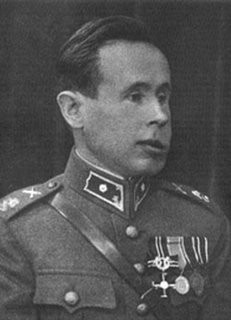
Deemed one of the greatest snipers of all time, Simo Häyhä represents the resilience of the Finns against their Soviet adversaries during the Winter War coinciding with World War II. Born in the small town of Rautajärvi in 1905, Simo tasted Soviet oppression at an early age due to the close proximity to the Russian border. Häyhä enjoyed the rugged landscape of rural Finland and swiftly developed as a farmer and skilled hunter known for his marksmanship. This solitary lifestyle enhanced his prowess with weaponry, an aptitude proven vital during the oncoming Winter War.
In 1925, a seventeen year old Häyhä joined the Finnish Army for a year of mandatory service and achieved the rank of corporal. Eventually Simo Häyhä joined the Suojelskunta (Finnish Civil Guard) similar to the National Guard of the United States prior to being entangled in the Winter War under the 6th Company’s banner. Simo responded to the aid of his country when the USSR invaded in November, three months after the eruption of WWII in 1939. While drifting through the tundra, Simo concealed himself by wearing white camouflage and refused to use a scope for he noted that the sun would reflect off the glass and give his position away. Another innovation he utilized was to put snow in his mouth in order to deny a foggy exhalation from escaping his lips. He took every precaution to avoid tipping off Russian counter-snipers of his location; soldiers bent on deposing their most feared adversary whom they dubbed “White Death.” Such a title was legitimized by his impressive five hundred and five head count. Using a Mosin-Nagant rifle which suited his short stature, Häyhä achieved the highest recorded number of confirmed sniper kills in any major war.
(An account of Simo Häyhä's background & military experience)
A tactical professional, Simo’s credited with two hundred deaths by way of a sub-machine gun in addition to his aforementioned glory. During the most brutal days of the Winter War, Simo’s company secured the demise of Soviet expansion. Defending the Kollaa region was nothing short of a miracle as exposed by the massive loss the Soviet Army suffered at the hands of Finns refusing to comply with communist invaders. "The Miracle of Kollaa" proved to be the epitome of the Finnish chant “sisu” which translates to “guts” or “fortitude” in which the Simo’s 34th Regiment, nobly clashed against twelve Soviet divisions which equated 160,000 men as opposed to the single Finnish unit. Striking fear into the hearts of the advancing Red Army, Simo took solace in the closely shrouded timber while forced to deflect artillery units specifically deployed to exterminate their lone, elusive threat. Despite invisibly stalking Soviets in temperatures as low as –40 °C, a Russian soldier struck his mark on March 6, 1940. The bullet exploded into Häyhä’s jaw, blowing away half of his face and yet survived. Although successfully retrieved from the battlefield, Simo slipped into a coma until he regained consciousness March 13, the very day the war ended.
After his recovery, Simo advanced to the rank of second lieutenant, a rapid promotional feat nonexistent in the Finnish military. Offering a transfixing quote, Simo explained his regret by stating that “I only did my duty, and what I was told to do, as well as I could.” Permanently disfigured, the humble man soared as a national hero. In his later years, the outdoors man occupied his retirement by hunting moose, breeding dogs and responding to interviews related to his wartime exploits. Häyhä embodies the spirit of Finland; having played a pivotal role through which his accomplishments contributed to preserving Finnish sovereignty. The great sniper and Finnish warrior encapsulated the strength of a nation reflected by his valiant service and calm resolve.
"Simo Häyhä The White Death - World's Greatest Sniper." http://www.mosinnagant.net/finland/simohayha.asp
(accessed January 27, 2014).
"The Incredible Story of Finnish Sniper Simo Hayha.”
http://www.simohayha.com/ (accessed January 27, 2014).
“Finland at War, 1939-45 Volume 141 of
Elite series” http://books.google.com/books?id=p58vtOKyVy8C (accessed January
27, 2014).
“Frozen Hell: The Russo-Finnish Winter War
of 1939/40.” http://books.google.com/books?id=yXsLNVaDfcoC&lpg=PP1&dq=Trotter,
William R. Frozen Hell: The Russo-Finnish Winter War of 1939/40.&pg=PP1
(accessed January 27, 2014)
“The Sniper Simo Hayha,” http://www.amazon.com/Sniper-Simo-Hayha-Tapio-Sarrelainen/dp/9525026744/ref=cm_cr_pr_pb_t
(accessed January 27, 2014).