Wednesday, March 4, 2015

The Contributions of Women During World War I

Liberty's calling, what's your response?
The progression of women’s roles drastically transformed from the pre-1914 era and blossomed into a period of liberation after the conclusion of World War I. Prior to the Great War, women either lived and worked within the home, served as domestic hands, taught as educators or where trained to assist editorial or administrative offices as secretaries. However, once war sparked in August 1914, the traditionally confiding “woman’s place within the home” altered radically along with the subsequent innovations and societal shifts emerging from the span of World War I.


In the Edwardian era, a woman’s duty consisted primarily of taking care of the home, raising children and participating in the community. Yet, it was rather common for middle-class women to work in factories or on the farm. The Great War demanded an extravagant toll of men, creating an economic gap which women began to fill. As women assumed roles traditionally barred to their gender, their career opportunities and political influence held considerable sway. Many transformed from into fully fledged nurses, journalists and public speakers who rallied unions, political parties and crowds to bring a solution to the needless bloodshed. An example of Edwardian literature and a product of pre-war mentalities, Anne of Green Gables, a piece of literature written by L.M. Montgomery has been adapted to the screen. Within the film, Anne shines as a confident and capable woman working as an author and teacher in the WWI era who ends up serving as a Red Cross volunteer, journalist and pacifistic advocate while seeking to reunite with her fiancé, Gilbert Blythe, a doctor stationed on the Western Front.

A clip detailing Anne's role as a journalist in Anne of Green Gables: The Continuing Story

Anne's video reveals how journalism and the power of female speakers lead to organized protests which impacted the suffragette movement and added validity to the public opinion of women in the realm of politics and social affairs. 
Propaganda showing women in different sectors of the war effort
 As the government hired and recruited women to partner alongside male soldiers, a significant force of women joined agricultural, industrial and fiscal ventures in order to support the war effort from home. Though women began to replace men in hard labor, such as in the mining, farming and factory industries, most appeared eager to engage in the conflict by enrolling as nurses and war correspondents, using their words and compassion to aid the bleeding and broken hearted.

The practice of “total war” demanded a mobilization of a nation’s entire resources, a financial method of funding the war which allowed for women to adopt economic positions previously limiting female access. For example, The Land Army took thousands of women from the cities and put them to work as “farmerettes” who worked and were paid equally as farmers, wore pants and proved to be such a successful development that the WLA was resurrected during World War II. The war’s impact on their lives most visibly is seen through the absence of male citizens. With the lack of this labor force, national organizations launched to which women clamored in the hopes of serving alongside their male counterparts in order to support their nation by front-line work and through non-combative vantage points.

With the introduction of conscription in 1916, women joined the labor force while others stayed domestic; instead opting to knit socks, raise money by buying war bonds, practicing frugality and through charitable activities. Wealthy women began to run their estates in place of their husband which led to estates being opened as hospitals or orphanages.
Happy Farmerettes of the WLA

In early 1915, women that went abroad to serve worked slightly removed from combat yet still in orderly positions such as medical, police and firefighting task forces. However, their capabilities and the demands of war increased their abilities to serve as ambulance drivers, convoys, medical personnel in the actual trenches and journalist correspondents. Seen as the angels of the battlefield, thousands of women served as nurses and bravely faced bombardments, disease and enemy attacks while aiding their distressed patients. As well as becoming nurses, laborers & members of the Land Army, women even volunteered as air force pilots and surgeons!

Nurses fought not only to save lives but surely saw their service as a means to establish a sense of independence and professionalism. The creation of the Woman’s Armed Forces formed specific roles for women to perform in war zones, such as driving vehicles, providing medical aid, entertaining soldiers through song and dance, serving as base staff and cooks, waitresses, clerks, and journalists; each embracing the innovation to utilize their new found skills. By 1918, millions of women were involved in the war effort.

On November 11, 1918, Armistice Day concluded the tremors initiated by ethnic turmoil in Austria-Hungary four years prior. The war greatly elevated a woman’s station in life yet women were expected to return to the domestic sphere so as to return men’s rightful positions in the work force. Yet the effects of World War I could not be so easily undone. Many young women continued work in male-oriented sectors - secretarial work being the one in which women came to dominate. Fashion changed too due to fabric shortages, which hiked women’s dresses up from their ankles and inspired the wearing of trousers and the trend of short hair just in time for the Jazz Age. However, the most profound impact of WWI for women was in the form of a piece of 1919 legislation which forbid employment discrimination upon the basis of gender as well as the powerful legacy heralded by the Suffragette movement. The organized masses of seasoned women, young and old, having served faithfully out of nationalistic pride and morality, now sought their own liberation. The feminist movement had built momentum and the international conflict poised Europe as well as America for radical change. With the US Constitution's implementation of the 19th Amendment, women’s suffrage triumphed in the form of the right to vote in 1920.

Conclusively, women performed a variety of diverse services throughout World War I and their involvement gleaned much reward. Despite prejudice and difficulty, many women saw wage increase, access to a wider pool of occupations and education which greatly increased their own societal independence and financial stability. The endeavors of the Suffragist movement fostered Edwardian women to throw off repressive patriarchal structures and societal norms in favor of pursuing equality before the law in the realms of political and economic reform. Feminism, existing prior to WWI, was immensely enhanced by the 1914 conflict which, without the intention of doing so, shaped and cultivated gender equality and further established the authentic upholding of Classical Liberalism which validates the intrinsic value and sociopolitical rights of the individual.


Suggested Reading:

Adie, Katie. Fighting on the Home Front: The Legacy of Women in World War One. London: Hodder & Stoughton, 2013.

Atwood, Kathryn J. Women Heroes of World War I: 16 Remarkable Resisters, Soldiers, Spies, and Medics (Women of Action). Chicago, Illinois: Chicago Review Press, 2014.

Hallett, Christine E. Veiled Warriors: Allied Nurses of the First World War. Oxford: Oxford University Press, 2014.

Macdonald, Lyn. The Roses of No Man's Land. London: Joseph, 1980.

Newman, Vivien. We Also Served: The Forgotten Women of the First World War. Barnsley, South Yorkshire: Pen and Sword History, 2014.

Nicholson, Virginia. Singled Out: How Two Million British Women Survived Without Men After the First World War. New York: Oxford University Press, 2008.

Zeinert, Karen. Those Extraordinary Women: WWI. Brookfield, Connecticut: Millbrook Press, 2001.

Tuesday, January 20, 2015

Eddie Rickenbacker: Ace of Aces


Known as “America’s Red Baron,” Edward Reichenbacher, the son of Swiss immigrants, grew up during the early 1900s in Columbus, Ohio. An aptitude for speed inclined Eddie to race in multiple Indianapolis 500s in which his skills swiftly vaulted the young man to third place among all American racers in 1916. Driving for different motor companies offered Rickenbacker a substantial income and a mechanical career which soon ignited a passion for the developing field of aviation.


Patriotic heart ablaze, Eddie immediately volunteered to join the armed forces upon the United States' decision to intervene in the international affairs of World War 1.
Innovative and resourceful, he petitioned to form a league of militarized racecar drivers, a unique alternative that was promptly refused. Despite the rejection of his idea, Eddie received a position as the personal driver for General John Pershing and other high-ranking officers. He was even called upon to repair the car of Army Air Service Chief, Billy Mitchell, who insisted on Rickenbacker attending aviation school in France which specialized in training US airmen prior to their deployment to the Western Front. However, he remained at Issoudun as an engineering officer who was permitted to fly outside of his duties yet forbidden from participating in the war. Growing restless with the arrangement, Eddie requested to join the most recent aerial division, the 94th Aero Squadron; a request which was granted.

With fast reflexes and a keen eye, Eddie took to the sky in a Newport 28 until the famous Spat 13 could be mobilized. Though Newport aircrafts were fast and nimble, the machine lacked diving prowess in which many a pilot suffered though up to eighteen thousand feet of brutal wind chill in an open cockpit during the descent.

A WWI Dogfight clip from Flyboys, 2006

Modeled after Eddie's plane, a Spat 13 bears the "Uncle Sam's Hat in the Ring" colors in honor of  the 94th Division
Apparently ambitious, Eddie successfully achieved five confirmed air combat kills within his first month of combat, an act which awarded the French War Cross and elevated the pilot to ace status. He became the commander of the 94th aerial division, entitled "Uncle Sam's Hat in the Ring Squadron" to represent the United States' intention to aid the Allies. At the Great War’s end, Rickenbacker had achieved twenty-six air victories, boasting the greatest destruction rate of enemy planes of any American pilot during World War I. His record proved the necessity for increased air power and the emerging contest for air superiority. With the signing of the Armistice in 1919, he returned to the US and toured the nation as a celebrated hero.


Lavishing in the height of personal fame, Eddie created an auto-manufacturing company, Florida Airways, with fellow WWI pilot Reid Chambers in 1922. Though the company produced quality vehicles, steep competition drove the firm to bankruptcy. Employment with General Motors enabled Eddie to earn enough money to pay his debts and purchase the Indianapolis Speedway, which he maintained until 1940. In 1930, Eddie was one of four men who received the Medal of Honor for their gallantry in WWI yet his participation in international affairs was far from over. On Sept 1, 1939, Nazi Germany invaded Poland, effectively launching the globe into crisis.

Initially, Rickenbacker opposed US intervention yet retracted his opposition upon Japan's attack on Pearl Harbor in 1941. From the tragedy onward, the famous pilot wholeheartedly supported American involvement and promptly responded to assist as a civilian in military affairs. At the request of Gen. Hap Arnold, Eddie went on a tour of military bases to determine their morale and status. Later, due to Secretary of War, Henry L. Stimson, Rickenbacker flew off on an ill-fated mission over the Pacific. Drifting 600 miles off course, Rickenbacker and other survivors were fortunately rescued by the Navy twenty four days after impact into the ocean. In 1943, Sec. Stimson again requested Rickenbacker’s services. He was privately commissioned to inspect and gather intelligence from China, India, Iran, North Africa, and the Soviet Union.

At the conclusion of World War II in 1945, Eddie officially retired from the military to pursue the arena of commercial airlines. In the late 1950s, Rickenbacker began to speak adamantly about conservative sociopolitical concerns. An autobiography captures some of his marvelous and stirring feats from the World War I era. The successful and exciting life of Eddie Rickenbacker, stretched between many crucial decades of world events, came to an end with his passing in Zurich, Switzerland on June 23, 1973.

A documentary presented by the Nat. Museum of the U.S. Air Force on Cpt. Rickenbacker's role in WWI

Eddie Rickenbacker’s exploits during the Great War and through his career as an aviation and government consultant prompted the most decorated United States combat pilot to advocate for the vital necessity of American air power. A pioneer in air transportation, Rickenbacker was conscious of ensuring that the legacy of America’s fledgling aviation history was preserved. Today, Eddie is synonymous as an immortal ace and remains a leading figure of national recognition.


Suggested Reading:
Hart, Peter. Aces Falling: War Above the Trenches, 1918. London: Weidenfeld & Nicolson, 2007.
Groom, Winston. The Aviators: Eddie Rickenbacker, Jimmy Doolittle, Charles Lindbergh, and the Epic Age of Flight. Washington D.C.: National Geographic Society, 2013.
Jeffers, H. Paul. Ace of Aces: The Life of Capt. Eddie Rickenbacker. New York: Ballantine Books, 2003.
Lewis, W. David. Eddie Rickenbacker: An American Hero in the Twentieth Century. Auburn, Ala.: Johns Hopkins University Press, 2008.
Malinovska, Anna, and Mauriel Joslyn. Voices in Flight: Conversations with Air Veterans of the Great War. Barnsley: Pen & Sword Aviation, 2006.
Rickenbacker, Eddie. Fighting the Flying Circus. Garden City, N.Y.: Doubleday, 1965.
Rickenbacker, Eddie. Seven Came Through; Rickenbacker's Full Story. Garden City, N.Y.: Doubleday, Doran, 1943.
Ross, John F. Enduring Courage: Ace Pilot Eddie Rickenbacker and the Dawn of the Age of Speed. St. Martin's Press, 2014.

Sources:

Sunday, October 19, 2014

Fury - Film Critique

Set within the onslaught of WWII, Fury provides a practical and raw depiction of warfare and the cruelty of mankind. Highly inappropriate in terms of language and realistic carnage, Fury succeeds as an emotionally striking film designed for the audience to be overwhelmed by shock along with the experience of the characters surviving in a chaotic swirl of savagery, abuse and forgotten morals.

Appreciatively, the historical accuracy of military units and weaponry were utilized as a main element, examples of WWII era trademarks such as grenades, smoke bombs, mortars, rapid fire and a mass of US tanks proceeding 
Allied fire appears as red lasers to assist the audience's sight
in converging columns through a series of hedgerows weeks after the commencement of D-Day. A prominent example of US firepower was displayed through a glimpse of the air force which passed by overhead while a battalion of Sherman tanks led by tank Fury confronted a German Tiger and an SS brigade as the Allied forces strove to conclude the war by subduing town after town as the unit continued to press on into Germany.
Norman's introduction to Don & tank unit: Fury
However, the direction of the plot intended not to glorify the military but to expose trampled virtue. This theme is emphasized through the demoralization of Norman Ellison, a youth who’s loss of innocence is continually stressed throughout the course of the film. Introduced as a bumbling clerk-typist disgusted by injustice, he is swiftly taught a lesson by his commander, Don "Wardaddy" Collier, who physically forces him to murder a captured German POW, an act signifying the first tainting of his character with his first shedding of blood.
Don orders Norman to finish the POW, arguing that war is "to kill or be killed."
From this point, he is further instructed to engage in improper relations with a German girl, the diminishing of their purity, and finally through the manner in which he strikes down his enemies with artillery fire while chanting curses at the oncoming barrage of Nazi forces before his tank. During the finale, his companions entitled him “machine” as that is what he has become, a machine of war devoid of compassion; the young soldier no longer seeing his enemy as a human being but rather as a target to be extinguished for the sole purpose of an end goal swamped with vengeance.
Norman stands atop his gunner hatch
Surprisingly, Fury highlights that it is but a German soldier who is to be merciful upon Norman. Ironically, the soldier appears to be roughly the same age, a fact that not all Germans are monsters and that many are caught up within the throes of war, similarly sharing Norman’s fate. The German’s compassionate gesture harkens the trace of what Norman has lost; that noble former self he had intended to maintain. His inner commitment to displaying justice regardless of the immorality around him is expounded by how Norman’s terrified eyes stare up in desperation at the German soldier who kindly smiles and deliberately chooses to spare the life of the young boy covered in mud and the blood of his fallen comrades.
An impactful theme laced throughout Fury is the portrayal of tarnished morality. This motif is visible in Norman and through the example of a character Boyd Snicknamed “Bible,” a Christian who poses as the moral compass of the tank. Although Bible displays grace and is a channel pointing towards salvation, he additionally serves as an overpowering presence in certain instances, specifically in the scene where he aloofly sits on the tank, refraining from looting while soldiers plunder the captured town and while at the dinner table in the German home. His presence reminds his platoon leader that they have a duty to respond to, one of which does not allow a pretense of peace while at war.


Boyd "Bible" Swan receives orders that Fury is to proceed further into the Rhine
However, Bible’s consequential nature also falters in the face of moral indignity, wherein he remained silent when there were appropriate times in which he should have stood resolutely for an actual execution of ethics instead of standing disapprovingly by as his company devalue and humiliate the German ladies and in another instance when they cuss, jeer and erupt into praise over the massacre of Nazis with the desire to extend their suffering. Ultimately, Bible’s character offered the dim light of salvation and a purpose beyond the harsh reality experienced in Europe, 1945. His unexpected demise could even be argued as a pardon from God, concealing Bible within Himself in order for the Christian to not experience as much pain in his instant death compared to the lingering doom awaiting those remaining within Fury.
I heard the voice of the Lord calling, "Who will go for Us?" And I said, "Send me."
While this film does not receive a high recommendation, as the characters were difficult to find endearing, I appreciated the director’s attempt to portray a realistic account. Despite the artistic intention, I found myself hardly caring whether they survived for I had become disenchanted by their adverse behavior, deplorable logic, inhumane treatment of women and thoroughly disgusted at the militant culture that subjected its own soldiers to promote such brutality to simply prove the point that its either your death or your enemy’s in war, regardless of how practical and base that notion is.
Conclusively, Fury presents a harsh exposé of American soldiers during WWII – showing how a fierce, typically drunk and foul-mouthed, mismatched band of soldiers were able to loosely unify around the tank that they were willing to sweat, bleed and die within in order to protect one another and preserve the pursuit championed by the Allied forces. The film climaxes with Norman being heralded as a hero yet such praise starkly resonates with the fact that they are indeed heroes, but heroes that compromised their morality for the sake of unrealized ideals accomplished through anything but just means due to succumbing to animalistic tendencies and debase ethics justified by war. Their sacrifice, no matter how gallant a demise, does not justify previous brutality and the battalion’s blatant disregard of righteousness.

Wednesday, May 28, 2014

I'm Off to Europe!

Hello! I have yet to post a new entry in quite awhile but I promise I'm working on some good content to show you soon!


Now, this blog features historical/educational information and yet, I'd like to make it a bit more personal. In order to accomplish this, I've decided that I might post reviews on some of my purchases or the locations I've visited. If there is anything in particular you'd like to see or are interested in, please comment below :)

Some exciting news is that I'll be traveling to Europe for the first time! I can't believe I'll finally be standing before the Eiffel Tower and wandering about Trafalgar Square in about a week. You can just sense my bursting enthusiasm I'm sure.

The Seine at night

Besides seeing monuments and elaborate architecture that I've longed to witness my entire life, I'm most excited about trying those famous French baguettes and hopefully manage to enjoy an hour or so by the Seine while sipping coffee at a charming little cafe.

If only in my dreams!

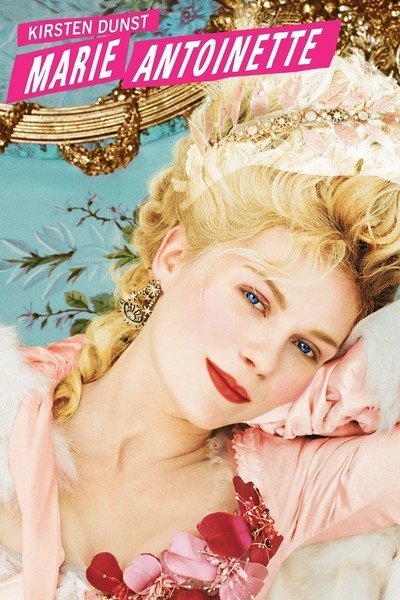
Speaking of which, if you're into French history or fabulous movies like Marie Antoinette, you should check out my website on the Palace of Versailles!


I created this website as a university assignment. I can guarantee that you won't be disappointed and you might learn a surprising thing or two, especially regarding 18th century Parisian fashion including why wigs and mouse fur were used!

I'll be back after my trip,

Much love and many blessings to you all until then!

Monday, March 17, 2014

Loyalty of the Golden West

Loyalty of the Golden West:
The Internment of Japanese Americans

During World War II, following the attack on Pearl Harbor, nearly 120,000 Japanese-Americans were forcibly relocated to internment camps. Those who lived along the West Coast, whose loyalty to the United States was previously unquestioned, instantaneously faced prejudice and discrimination as public opinion viciously turned against citizens of Japanese descent. As the media circulated the devastating horrors experienced at the Hawaiian naval base, Americans grew nervous, apprehensive that another such bombing could occur closer to home. Fear prompted accusations to arise as those who supported the internment program desired to associate Japanese living along the Pacific with potential threats of espionage.
Notice of the Order posted in 1942
On February 19, 1942, Franklin D. Roosevelt signed Executive Order 9066, approving the government-enforced evacuation of supposed enemies to the state, gathering those of Japanese, German and Italian heritage in order to relocate these American citizens to relocation centers set in desolate portions of California, Idaho, Wyoming and other remote Western states. Although a portion of Europeans were evacuated, Japan alone faced massive removal. Roosevelt, prompted by the administration, enacted this ordinance primarily due to perceiving Japanese citizens as a threat to national security.
Traveling to internment camps


Realizing that the public had been swayed to segregate the Japanese, most burned or buried any possessions considered un-American such as records, books and even family heirlooms. Despite attempts to mask their identity and prove that they were assimilated into American culture; the Japanese were easily identified and resented by their neighbors, especially farmers who despised agrarian competition and the overwhelming presence Japanese farmers enjoyed in California’s central valley where they experienced economic success. Assuming that cultural and ethnic links to Imperial Japan would encourage reconnaissance, the United States government rapidly secured the majority of the U.S. Japanese population which resided within close proximity to the warring empire due to their position on the Golden Coast.
An example of Japanese segregation in Idaho

Within a forty-eight hour period, thousands of Americans claiming Japanese nationality found themselves within the custody of the Immigration and Naturalization Service which shuffled these exiles living in vulnerable zones into makeshift facilities. Although the bulk of these individuals were U.S. citizens by birth, two-thirds were forced to leave their homes, sell their businesses and pack only two suitcases per person within a two week period.

Japanese occupying the Fresno fairgrounds
Before being transferred to official camps, most Japanese loitered in racetracks and fairgrounds for months, only sheltered by meager tents and rations. Upon arrival to camps such as Manzanar, the occupants were instructed to build their own lodging. Overcrowded and ill-prepared, Japanese deportees survived in poor living conditions without plumbing or cooking facilities and inadequate supplies. Rationing cost forty-eight cents per internee and was served by camp members in halls housing roughly three hundred occupants. The camps housed pitiable barracks surrounded by barbed wire and armed guards.


Japanese families being escorted by military personnel
Some families were disrupted as members were separated and placed in one of the ten major internment centers while a few died from the lack of medical care and emotional distress.
A crowded mess hall
Those in desert regions endured harsh terrain and elements while every camp suffered bouts of food poisoning, extreme temperatures and unsanitary, communal lavatories and bathrooms. However, inmates were most concerned about their future for they were left uninformed regarding the duration that their internment would last. Though grieving economic loss and humiliation, Japanese unity emerged. Camps constructed civic councils, operated hospitals and newspaper services while churches offered education, choral and spiritual enlightenment.

Nurse Aiko Hamaguchi assisting Toyoko Ioki at the Manzanar Center
Civilians provided entertainment, enjoying movie screenings, sumo wrestling tournaments, recitals and the fruits of their gardens. In 1943 all internees over the age of seventeen were given a loyalty test, asking them to swear allegiance to their nation and defend her from any foreign or domestic attack. Detainees were allowed to leave the concentration camps if they were willing to join the U.S. Army, an offer that most refused.
Returning to barracks after a church service
Harrowingly, no American placed in the internment camps were officially charged with espionage nor were they provided with a trial. Two important legal cases eventually clamored against Japanese internment. Despite arguing that Japanese’ Fifth Amendment rights were violated by the U.S. government based on discriminatory claims, Hirabayashi v. United States (1943), and Korematsu v. United States (1944) both lost as the Supreme Court ruled in favor of the government. These cases occurred before Brown v. Board which would establish the doctrine of equal citizenship in 1954.
Families returning from internment camps with assistance
Two years after signing the Executive Order, President Roosevelt repealed the decision, allowed internees to return home and closed the final internment camp in 1945. However, this blatant override of constitutional power and racism alienated Japanese citizens who saw their citizenship tarnished by the very nation claiming equality for all. Although many faced hostility after their release, most decided to rebuild their lives while 5,766 natural born Japanese renounced their American citizenship and returned to Japan. Eventually, America issued government apologies and reparations to Japanese Americans for the property and years they had lost.

Manzanar Relocation Center in Central California
Japanese-American internment serves as one of the most sweeping deprivations of constitutional rights in American history. The Executive Order and forced relocation of hundreds of thousands of citizens deprived equal protection under the law which guarantees the Fifth Amendment, due process of law and the individual right to work, own property and live freely. Despite suffering injustice, this period of detainment serves as a warning, urging America to not stumble from her core values in order to ensure that such a denial of justice will not have the opportunity to occur again in the proceeding decades.

Suggest Reading:

American Council on Public Affairs . "Issei, Nisei, and Kibei." Displaced Japanese-Americans. Fortune Magazine, April 1944.

Without a Country. Women's International League for Peace and Freedom, 1947.

Outcasts! The Story of America's Treatment of Her Japanese-American Minority. Fellowship of Reconciliation, 1944.

Yoosun, Park. "Facilitating Injustice: Tracing the Role of Social Workers in the World War II Internment of Japanese Americans." Social Service Review 82.3 : 447-483.

Wozniacka, Gosia. "Memorial site to mark Japanese American detention during WWII." Lubbock Avalanche-Journal. http://lubbockonline.com/life/2011-10-09/memorial-site-mark-japanese-american-detention-during-wwii (accessed March 17, 2014).

"Korematsu v. United States, 323 U.S. 214(1944): The U.S. Supreme Court Upholds Internment." History Matters. http://historymatters.gmu.edu/d/5151 (accessed March 17, 2014).

"Ansel Adams's Photographs of Japanese-American Internment at Manzanar." Library of Congress. http://www.loc.gov/pictures/collection/manz/ (accessed March 17, 2014).


RLBARNES. "FEBRUARY 19, 1942: Roosevelt’s Executive Order 9066 and Japanese Internment During World War II.” U.S. History Scene. http://www.ushistoryscene.com/uncategorized/february-19-1942-roosevelts-executive-order-9066-and-japanese-internment-during-world-war-ii/ (accessed March 17, 2014).

Thursday, March 6, 2014

Visiting Monticello

Monticello, Jefferson’s “little mount” is a national historic landmark upheld by the Thomas Jefferson Foundation which runs the house as a museum and interactive estate. Inheriting land from his father, Jefferson began construction at twenty six and eventually accomplished the plantation in 1772 upon which he cultivated tobacco and wheat. After acquiring modern architectural ideals from his time spent in Europe after the death of his wife, Martha Skelton, Jefferson decided to renovate his homestead into a neoclassical structure. Throughout his presidency, from 1809 until his death in 1826, he continued to remodel-a process which was adapted by the Thomas Jefferson Foundation. The private non-profit organization purchased the property in 1923 and currently operates Monticello as a museum and educational institution.

I drove through thick Virginian wood until I reached the site prized atop a secluded buff in Charlottesville, Virginia. The villa overlooks the surrounding landscape and a grand visitors’ center that rests at the base of Monticello. Decorated by a naturalistic layout, the epicenter contains a ticket office, fountain, picnic tables, and a store that guests can browse while waiting to load onto a bus which carries tourists to the guided tour area. Once divided into a group, I was escorted about the premises by a tour guide. We approached the house along a gravely road and eventually I vaulted the steps of Monticello herself. Beginning at the Entrance Hall, the tour then proceeded to the study, library, private bedrooms, and parlor. Once the tour concluded on the balcony, visitors were allowed to roam freely.

Highly interested in horticulture, botany and agriculture, Jefferson entertained a lifelong pursuit of beautifying his grounds, establishing and nurturing an impressive flower and vegetable garden and vineyard. Fortunately the Garden Club of Virginia managed to reconstruct Jefferson’s garden to its current state, providing the public with a greenhouse blooming with over one hundred and five different species. I took advantage of this opportunity to explore the gardens, Jefferson’s prized orchard, and slave quarters along Mulberry Road before paying my respects at the family graveyard.

One of the most intriguing aspects of the statesman’s home was the welcome in which Thomas greeted his many visitors. Stunning his guests with revolutionary architecture and a personal reception, Jefferson also desired to impart his guests with a sliver of knowledge, an appreciation for culture and a portion of America’s rich history. He impressively furnished the Entrance Hall with maps, fossils, antlers, hides and various artifacts which Lewis and Clark had collected along their expedition, a mission personally sponsored by the Third President.
Serving as a museum and conversation piece, the Entrance Hall is filled with natural relics, Native American finery and artistic pieces that were meant to entertain and educate Jefferson's house guests. A humorous finding within this scene is that of a bust of Alexander Hamilton, his political opponent, fixed to eternally gaze across at the stony replica of Jefferson. A rather amusing detail is that Jefferson crafted his own likeness slightly larger than the Federalist. My tour guide explained that the two adversaries were intended to be “opposed in death” as they were in life; serving as a motivational challenge for Jefferson whenever he passed his threshold.


However, my favorite portions of Jefferson’s house were the parlor and the “Madison” room. Honorably, the Jefferson family referred to the west wing of the house as the Madison room for James and Dolly frequently visited and would often enjoy months of their dear friend’s company. On the other hand, the parlor featured as a living room specifically intended for discussion and entertainment. Jefferson is famously known as a violinist while many of his family members were also talented musicians who enjoyed hours of conversation, dancing and chess. The family would typically gather in the evenings to read. Virginia Randolph, Jefferson’s granddaughter, later recalled that sometimes while she was reading she would see him “raise his eyes from his own book, and look round on the little circle of readers and smile.” Reading would prove to be one of Jefferson’s greatest joys and in order to accommodate his company; Thomas installed a variety of chairs and sofas about Monticello, such as the campeachy chair.

Known as “siesta” chairs, Jefferson was often seen reclining in one with a book. Encouraged to try out the comfortable chair, I kindly took up the offer. I highly recommend its luxurious charm but inwardly cringed at the price of another campeachy I found in the store. I moved on from the chair and soon became fascinated by the numerous innovations Jefferson crafted which were showcased about the parlor. Jefferson is credited for designing a revolving closet, a dumbwaiter system based on the French dinning style, a weighted clock and even a dual pen which aided his many annotations.

Besides hosting notable figures that inspired Jefferson’s personal ideology, Jefferson also decorated the parlor and many of his private studies with busts of his close companions including Benjamin Franklin, James Madison, George Washington and even the distant Marquis de Lafayette. As I highly regard the French general, I was delighted to discover that his likeness was scattered about Monticello. Perhaps inspired during his tenure as Minister to France, Jefferson borrowed heavily from the French. Utilizing their sliding doors, modernized color schemes and artistic patterns, Jefferson designed his beloved home in an unconventional method unfamiliar to Colonial America.

Monticello remains an internationally acclaimed portion of world heritage, the only American house to be protected by the United Nation’s as an invaluable treasure and resource. Fun and interactive, the Monticello website is well organized with professional and engaging graphics and a surplus of links that are categorized according to Jefferson’s personal life, the architecture and the overall layout of his home. The website is user friendly and makes observing different portions of the site accessible while offering educational field trips, behind the scenes tours and holiday packages.
Additionally, the site features an elaborate greeting center and shop which contains authentic recipes, cheeses, wines, candles and books relating to the 18th century as well as tourist merchandise. The tour was an appropriate length and set at an affordable price although I wish one was allowed to study the rooms to a greater extent during or after the tour. In addition to receiving funding from private sponsors, the horde of annual tourists provides an ample income to regulate and improve the grounds for public history. Overall, this historic site is properly managed and maintained by the Thomas Jefferson Foundation which has successfully operated Monticello and intends to preserve the legacy of Thomas Jefferson for generations.

Suggested Reading:

Hatch, Peter J. “A Rich Spot of Earth”, Thomas Jefferson’s Revolutionary Garden at Monticello. Monticello.org.
Fleming, Thomas. "The Jew Who Helped Save Monticello", The Jewish Digest, February 1974: 43–49.
"Monticello (Thomas Jefferson House)". National Historic Landmark summary listing. National Park Service. Retrieved 2014.